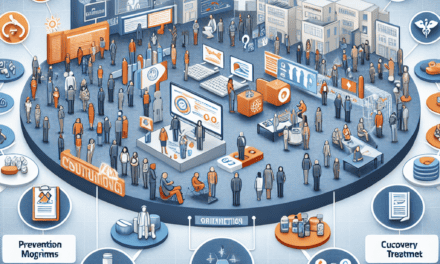
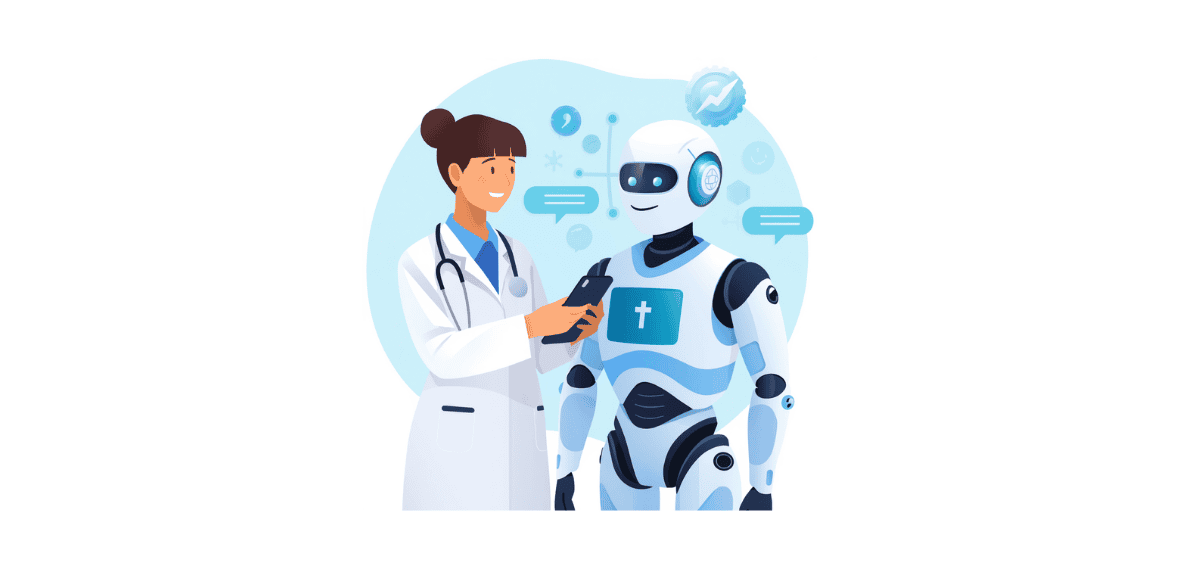
Patients do not experience healthcare as a set of departments, workflows, or billing codes. They experience it at the front door. That front door may be a clinic website, a call center, a patient portal, a chatbot, a referral line, or a text message. When access is slow, confusing, or fragmented, the patient feels it immediately. Delays at this first step can shape everything that follows, from trust in the organization to the speed of treatment.
That is why AI triage tools are becoming increasingly important in modern patient access. Clinics and health systems are using artificial intelligence to guide patients to the right level of care, gather symptom details, support scheduling, reduce staff burden, and improve the overall access experience. These tools are not replacing clinicians. Instead, they are helping healthcare organizations manage rising demand, staffing shortages, and patient expectations for faster digital service.
As healthcare leaders seek better ways to improve access, reduce unnecessary emergency department use, and streamline intake, AI in patient access is moving from a pilot to an operational strategy. This article explains how AI triage tools are changing front-door patient access, where they create value, what risks health systems must manage, and what successful adoption looks like in practice.
What Are AI Triage Tools in Healthcare?

AI triage tools in healthcare are digital systems that help assess a patient’s symptoms, urgency, and care needs before an in-person visit. They often appear as symptom checkers, chat-based intake assistants, virtual agents, nurse support tools, or routing engines built into websites, apps, portals, and contact center workflows. Their goal is to collect useful information early and direct patients to the most appropriate next step.
That next step may include self-care guidance, a same-day primary care appointment, a telehealth visit, urgent care, specialist follow-up, nurse review, or emergency care. In many cases, the tool also gathers structured information that supports scheduling, registration, and clinical handoffs. This makes the access journey smoother for both patients and staff.
The broader shift is not just about automation. It is about creating a more intelligent digital front door. The digital front door in healthcare is now expected to be available around the clock, easy to use, and consistent across channels. AI triage helps organizations meet that expectation while improving operational efficiency.
Why Front-Door Patient Access Needs to Change
Patient access is one of the biggest problems in patient care. There are tons of patients, not enough staff, and call times get so long that patients can’t stand it. Many clinics are even having trouble matching patients with the correct appointment. Many patients are confused about where to go to get care, especially after hours. This wasted potential results in care being given later than needed.
For healthcare systems, poor access causes patients to give up on making appointments, go somewhere else, go to the emergency room for a minor problem, or wait until their problem gets really bad. It puts even more pressure on the system and the scheduling, nursing, and admin staff who have to deal with so many inquiries that are mostly the same.
AI tools that address patient access issues can be helpful in the early stages of the care journey. They can quickly gather symptoms, ask follow-up clarifying questions, and prioritize patient urgency. They help connect patients with the proper care. AI tools are not the most complete answer to access issues, but they are definitely a step in the right direction.
How AI Triage Tools Improve the Patient Access Journey
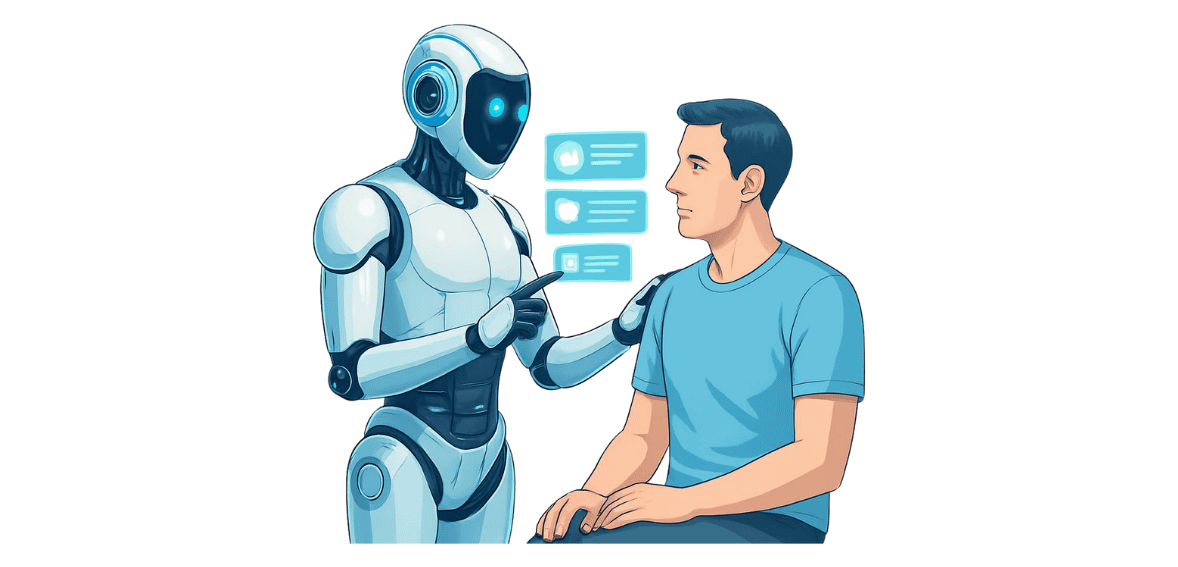
AI-powered triage tools are helpful for healthcare organizations because they enable faster patient responses without sacrificing structure. A triage tool can guide patients through the process with clear, simple instructions. Unlike with static forms, where every patient just answers the same questions, the tool can ask relevant questions, capture patient history, assess risk levels, and respond with a follow-up question or two based on the patient’s age, symptoms, or history.
With this functionality, the patient’s overall experience is improved. Worry and pain aren’t fun to experience, and deciding to go to the emergency room (or the local urgent care if there is one) can be very painful. An AI triage tool can provide some support to patients where there had previously been a high level of uncertainty. AI triage tools can be helpful to those whose schedules do not allow a trip to healthcare facilities during business hours, as they provide a level of service for people who are busy or have long hours.
AI triage tools improve the organization’s workflow by providing structured, supported data intake, reducing the data that employees and medical staff need to collect. With AI triage, you can achieve shorter calls and even more accurately route your patients. Real gains can be made for organizations with high call volume, even with the short data-collection period.
AI triage tools also help maintain consistency. While triage teams and others are very good at what they do, and we should give them credit, not every employee or team, especially those stationed internationally and at different times, has the same level of diligence. AI triage tools provide and support the same level of diligence and intake and routing to improve the overall care experience. The triage tools are the real care improvement tools.
AI Triage and Care Navigation Across Care Settings
AI triage can also help with care navigation. It solves the problem of not knowing where to go for care. Primary care? Urgent care? Virtual care? Specialists? The emergency room? This causes inefficiencies in the health system, as patients end up in care settings where they shouldn’t be. Then they need to be directed to the appropriate care setting.
AI can help by reviewing symptoms and providing options for the care setting, depending on the urgency, available services, and the organization’s policies. This is useful for organizations in the health system where patient safety and the capacity and utilization of the system are of concern. Proper patient routing can reduce unnecessary emergency room (ER) visits and help fill appropriate ambulatory slots.
AI triage can also help with access to specialists. Let’s say the patient needs an intervention for their gastrointestinal symptoms. This could include primary care, direct scheduling with the gastroenterology specialist, imaging, etc. An effective triage system can help provide these options better than a scheduling menu.
The Operational Impact for Clinics and Health Systems

For clinics and health systems, AI’s usefulness for patient intake and triage extends beyond ease of use. It can affect staffing, patient throughput, and retention, and overall financial health. When patients are directed to the appropriate care setting earlier, organizations can reduce unnecessary transfers, rework, and scheduling issues. This helps keep capacity for patients who need it the most.
Another significant advantage is administrative efficiency. Contact center staff answer many of the same questions about symptoms, appointment requests, and next steps. An AI can handle some of the most repetitive tasks, while one-off cases of a more significant nature or those deemed more risky can be handled by someone. Essentially, workforce leverage can be improved, though a fully automated access model is unlikely to replace staff.
Then, there is the data to consider. AI triage systems analyze and break down patient intents, symptoms, demand for access, and channel activity. Health systems can use this data to improve staffing, pinpoint and address access issues, and optimize care. Having better, more organized data can help inform and improve patient experience and access.
Clinical Safety, Trust, and Governance Matter
AI triage can misfire when it ignores symptoms, is vague, or leads patients to the wrong place. This creates many patient care issues. This is why clinical governance for AI is a must.
Health systems require oversight of the development, validation, audits, and updates to triage logic. Clinical governance must assess and manage the triage logic rules, the guidance, and the workflow. Health systems require a comprehensive performance improvement plan that includes identifying and intervening in all unsafe or unwarranted recommendations/assessments made by the AI.
Patients have every right to be assured that AI triage tools and assessments are based on thorough, clinically safe, and warranted triage logic. Overpromising can undermine the confidence that’s been built.
Patients have a right to confident AI triage systems just as they have a right to private, protected, and compliant systems. Patients’ protected health information and AI assessment systems must be treated with the highest degree of trust. Health systems should monitor the evolving landscape of healthcare AI systems and be ready to respond to guidance from trusted healthcare and policy partners.
Integration Is What Turns AI Triage Into Real Access Improvement
AI triage will rarely be standalone in most of healthcare. The best AI triage happens when triage is consolidated within the patient access ecosystem: the website, patient portal, EHR, CRM, scheduling, contact center, and referral systems.
Without integrating triage, patients will complete triage with you and then, when the time comes, must repeat everything they’ve done again to schedule care. With good integration, symptom details can inform triage rules and dictate handoffs to the appropriate teams, and ensure that the patient context is preserved and carried through to the encounter.
This is where the idea behind the digital front door strategy comes in. AI triage is most efficient when integrated into a connected access model rather than used as a standalone chatbot on the homepage. Effective organizations prioritize patients’ needs over their own and use the patient journey as the design framework for their work.
Ada Health
Ada Health is one of the best-known companies in the symptom assessment and care navigation space. Its work reflects the broader market direction toward conversational symptom collection and structured triage support. Solutions in this category aim to help patients describe symptoms in natural language and receive guidance on appropriate next steps, while also supporting health systems seeking more scalable digital entry points.
Microsoft
Microsoft has also played a visible role in the healthcare AI landscape through cloud, ambient, and clinical workflow technologies. While the company’s health AI efforts span far beyond triage alone, its presence shows how large technology platforms are shaping the infrastructure behind patient access, interoperability, and intelligent workflow tools across health systems.
Oracle Health
Oracle Health is relevant in this conversation because front-door triage becomes more useful when it connects with EHR and scheduling workflows. Companies that sit close to core health system infrastructure can influence how symptom intake, appointment routing, and patient access data move across the organization. That back-end connection is often what determines whether an AI access tool creates real workflow value or remains a digital add-on.
What Successful Adoption Looks Like
Where do you even begin to implement a solution centered around a chatbot? The answer is simple: start with a tiny use case. Some systems start with symptom triage, others with urgent care, and still others with specialty referral intake. For some, pediatrics and women’s health are good use cases. From our experience, a narrow start is nearly always more successful than an attempt to automate multiple entry points at once.
It is also important to identify the right outcomes at the start. Health systems look beyond engagement stats. The right metrics answer the tool’s ability to improve conversion, ease of care, speed of care, reduce call volume, enable better routing, and sustain patient satisfaction.
Across countless patient systems, the experience with technology is of utmost importance, and chatbot engagement is our first concern. The top systems lead with intuitive design, simple, clear language, and, almost always, a mobile-first approach. The latest research shows that patient-centered design has a positive net effect on the entire system. The design of digital health technologies must align with clinical workflows to ensure safety. The use of design in tandem with a demonstrable net conversion has a notable positive effect on the entire digital health system.
The Future of AI Triage in Healthcare Access
AI screening in healthcare is going to progress and become more personalized, integrated, and proactive. Health systems will not only be able to respond to and process symptom inputs, but also take in a patient’s medical history, risk factors, preferences, location, real-time capacity, and more. This would improve the accuracy of care selection.
Generative AI will also enhance accessibility and create a more natural, user-friendly experience. Though that still requires considerable caution on the part of healthcare organizations. The demand for more conversational systems to ease the user experience will not always prioritize clinical safety. The right balance will be found in systems that combine user experience with an evidence-driven, proven workflow integration.
AI will be used as part of a broader and more successful access transformation strategy. This also includes self-booking, digital registration, improved referral management, revamped contact systems, and integrated patient outreach. Triage is the most significant and foundational part of healthcare access, helping organizations manage patient care and meet demand.
Conclusion
AI triage tools are changing front-door patient access by addressing one of healthcare’s most visible and persistent problems: getting patients to the right care quickly and clearly. They can reduce friction, improve navigation, support staff, and make digital access more available at scale. For clinics and health systems under pressure to improve both patient experience and operational efficiency, that is a meaningful opportunity.
Still, the value of AI triage depends on how it is implemented. Safe clinical governance, strong integration, transparent design, and clear outcome measurement matter far more than hype. The organizations that succeed will be those that treat AI triage not as a novelty but as a carefully managed part of a smarter digital front door.
FAQs
Q: What is an AI triage tool in healthcare?
An AI triage tool is a digital system that collects symptom information, assesses urgency, and helps guide patients to the most appropriate next step, such as self-care, primary care, urgent care, telehealth, or emergency care.
Q: How do AI triage tools improve patient access?
They improve patient access by reducing delays, offering 24/7 digital guidance, gathering intake information earlier, and routing patients more accurately across care settings. This can reduce call center pressure and make the care journey easier to navigate.
Q: Are AI triage tools replacing nurses or doctors?
No. In most healthcare settings, AI triage tools support patient access and early navigation rather than replace clinicians. Human oversight remains important, especially for complex, high-risk, or unclear cases.
Q: What should clinics and health systems look for in an AI triage solution?
They should look for clinical safety, transparent escalation rules, workflow integration, EHR and scheduling connectivity, strong privacy controls, patient-friendly design, and measurable impact on access, efficiency, and patient experience.